
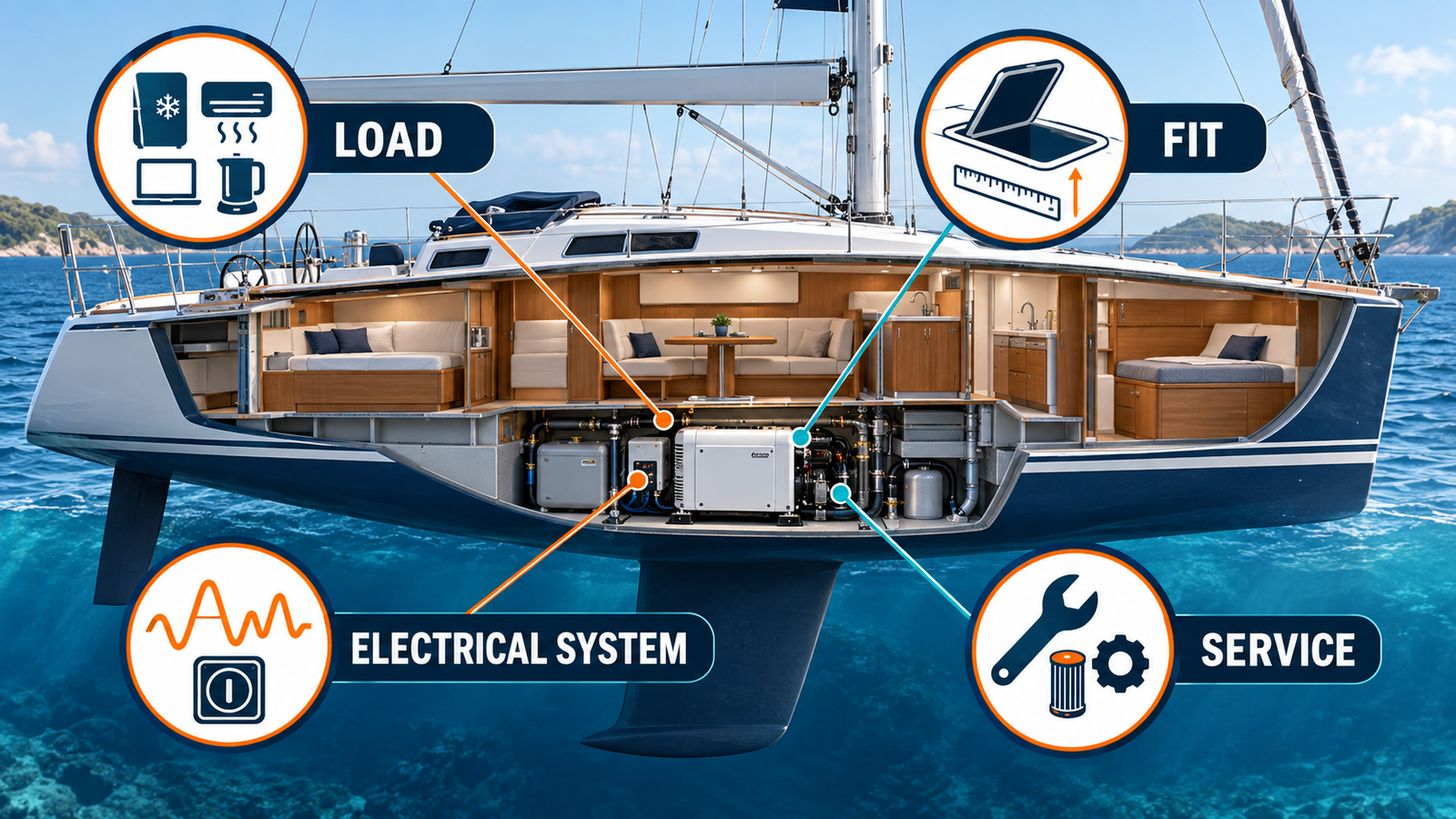
Picture a skipper looking at an ageing 5kW genset and thinking, “I’ll just replace it with another 5kW unit.” Then the questions begin: Will the new generator fit through the hatch? Does it match the boat’s frequency and voltage? Can it start the air-conditioning compressor while the battery charger is running?
That’s the heart of choosing a marine generator for sailboat cruising: the right unit must fit the boat’s electrical needs and its real-world installation limits. A larger rating does not automatically mean a better choice, and a similar kilowatt rating does not guarantee a direct replacement.
The best sailboat generator is the one that can handle the loads you need to run together, matches your electrical system, fits with room for service, and has practical parts and support options. This guide compares the 3kW–10kW range, explains what to check, and introduces a simple framework for narrowing the choices.
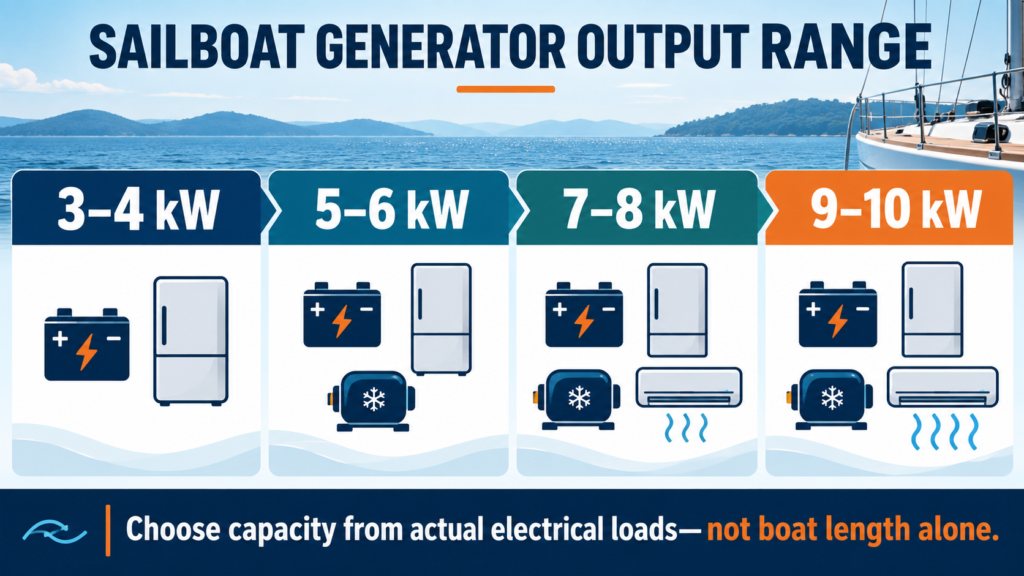
The output bands below are starting points for comparison, not fixed rules based on boat length. The right choice depends on your actual appliances, their startup demands, electrical configuration, and how you use the boat.
| Generator range | Use cases to investigate | Main consideration |
|---|---|---|
| 3kW–4kW | Modest electrical demand, selected appliances, or battery charging | Check startup surge and which loads must run at the same time |
| 5kW–6kW | A broader mix of charging and comfort loads | Confirm continuous output and available engine-room space |
| 7kW–8kW | Higher or more frequent simultaneous loads | Compare weight, noise, footprint, and installed cost |
| 9kW–10kW | Sailboats with heavier electrical demand | Make sure the extra capacity is needed and the unit can be installed and serviced |
Sailboats often have tighter machinery spaces than buyers expect, and installation can affect both maintenance access and how easily the unit can be removed later. Sailboat generator comparisons should therefore include more than kW rating. Marine coverage of generator selection also emphasizes dimensions, weight, service access, and the space required for a sound shield.
A generator may fit inside a compartment but still be difficult to install, connect, or service. Measure the available length, width, and height, then check the route from the deck or cabin opening to the installation location. Include room for the sound enclosure and for reaching filters, belts, electrical connections, and other service points.
Also consider nearby equipment. A generator that blocks access to a shaft seal or another critical component may create maintenance problems even if it fits neatly into the space.
Compare the marine genset’s wet weight and dimensions with the vessel’s layout. Where the generator sits can matter to the boat’s balance, so its position should be reviewed as part of the installation rather than treated as an afterthought. A qualified marine installer can assess the vessel and the manufacturer’s installation requirements.
The advertised noise figure is only useful when you know how it was measured. Check the distance, operating conditions, and whether the figure applies with a sound enclosure. Installation also matters: mounting, exhaust routing, and the surrounding structure all affect the noise and vibration experienced aboard.
For a quiet marine generator, compare like with like. A lower published decibel number measured under different conditions may not mean the generator will sound quieter in your cabin.
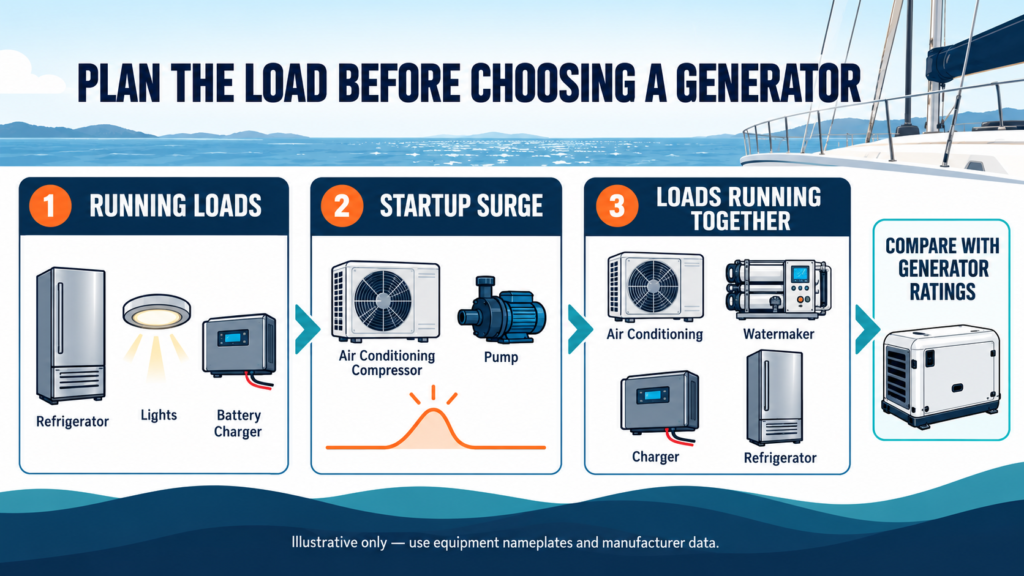
A battery charger, refrigerator, watermaker, air conditioner, pump, and galley appliance may not all run at full demand at the same time. But some motors and compressors draw a higher starting surge than their normal running load.
Write down which equipment you need to use together, not only what is installed. This practical marine generator sizing step can help identify whether you need a compact unit, more capacity, or a better plan for staggering loads.
Before comparing a compact marine diesel generator or any other fixed genset, build a simple picture of the boat’s electrical demand.
Include the equipment you expect to operate while away from shore power: battery chargers, refrigeration, air conditioning, watermakers, pumps, cooking equipment, lighting, navigation, and communications gear. Separate must-run items from occasional conveniences.
Check appliance nameplates and manufacturer documentation for starting and running requirements. Then identify which loads may start at the same time. A generator that can support the total running load may still struggle when a compressor or motor starts alongside other equipment.
Confirm whether the boat needs AC or DC output, the correct voltage and frequency, and single- or three-phase power where applicable. Do not assume a generator designed for a 50Hz system will suit a 60Hz boat, or vice versa; check the requirements of the onboard equipment and the specific generator configuration.
There is no single best marine generator for sailboat use. A 3.5kW unit may suit a space-limited boat with moderate demand, while an 8kW model may be a better candidate when the owner needs more capacity. The right comparison starts with the generator’s continuous output and electrical configuration, then checks whether its size, weight, installation requirements, and support fit the vessel.
A 3kW–4kW marine generator is worth considering when the boat’s load plan is modest, space is tight, or the main job is charging batteries and supporting selected appliances. The trade-off is limited capacity for running several high-demand devices together. Check compressor startup requirements and identify which loads can be staggered.
One current example is the Fischer Panda 3.5e. Its manufacturer lists 3.6kW AC output and describes it as a compact inverter generator for boats, including sailboats. Treat those figures as model-specific: confirm the electrical version and the continuous output specified for the exact unit you’re considering.
A 5kW–6kW marine generator gives buyers a higher output class to compare for combinations of battery charging and onboard comfort equipment. Whether it can run a particular mix of appliances depends on the ratings of those appliances, their startup requirements, and what else is operating at the same time.
Compare continuous and peak ratings separately. For example, Fischer Panda lists the AC 7 Mini at 6.5kW continuous output and specifies a 60Hz, 120V configuration on its product page. Buyers should use the datasheet for the exact configuration, rather than assuming every generator sold under a similar model name has the same voltage or frequency.
A 7kW–8kW marine generator may suit a sailboat with more substantial or simultaneous electrical loads. Before moving into this range, ask whether the extra capacity addresses a real need. If the main requirement is charging batteries, a larger AC generator may not be the best fit for the whole electrical system.
Model names can make comparison confusing. The Fischer Panda Panda 10000x PMS, for example, is listed by its manufacturer at 8.0kW nominal output in a specific 230V, 50Hz, single-phase configuration. Its “10000” model name does not mean its listed nominal output is 10kW. Check the rating and configuration in the current datasheet.
A 9kW–10kW marine generator is a candidate for boats with higher electrical demand, but the rating alone does not establish that it is the right choice. A larger unit may require more installation space and weight allowance, and it can increase the project cost. Confirm the boat’s actual simultaneous loads and check the proposed generator’s complete installation envelope.
Pay close attention to the difference between kW and kVA, and between peak and continuous output. Those ratings are not interchangeable. Ask the supplier to confirm the usable output for the specific voltage, frequency, and phase configuration.
Marine Generator Depot’s catalog covers brands such as Cummins Onan, Fischer Panda, Northern Lights, Westerbeke, Kohler/Rehlko, Nanni, Paguro, Mase, and Phasor. That creates several possible candidates, but brand reputation alone won’t tell you whether a particular model fits your sailboat. Compare model-level specifications and support for the areas where you cruise.
Compare suitable Cummins Onan Quiet Diesel models by output, voltage, frequency, footprint, sound enclosure, controls, and parts access. Confirm the complete model code: different versions may have different electrical configurations or specifications.
Fischer Panda’s lineup includes compact AC models and DC charging options. Compare the exact model’s output type, operating configuration, installation dimensions, and cooling requirements. Its manufacturer describes the 3.5e as a compact AC generator and lists separate DC products for battery charging.
When comparing Northern Lights marine generators, check the specific model’s output and configuration, plus its dimensions, cooling system, and installation requirements. Ask about service and parts availability in the areas where the boat will operate.
Compare these brands when a current, suitable model is available for your boat’s required output and electrical setup. A useful shortlist is based on verified specifications, local support, and installation fit—not a universal “best brand” ranking.
| Specification | What to verify |
|---|---|
| Output | Continuous and peak output, in both kW and kVA where stated |
| Electrical configuration | Voltage, frequency, phase, and AC or DC output |
| Fit | Dimensions and weight, including the sound enclosure |
| Installation | Cooling, fuel, exhaust, controls, connections, and service clearance |
| Noise | Measurement distance and test conditions |
| Support | Warranty terms, parts availability, and service coverage |
| Price | What is included in the genset price and what adds to installed cost |
A conventional AC marine generator supplies AC power for compatible onboard systems. A DC marine generator is designed to charge a battery bank, which can then supply AC loads through an inverter. These options serve different system designs, so compare how each would work with the boat’s existing equipment.
An AC generator is worth evaluating when the boat regularly needs onboard AC power for equipment such as air conditioning or when the electrical system is built around direct AC generation. Check that the unit’s output and configuration match the loads it must serve.
A DC generator may suit an owner whose main need is charging a battery bank. The stored energy can then be used by an inverter for AC equipment. This approach depends on the battery capacity, charging plan, expected loads, and the compatibility of the existing system.
Solar panels, alternator charging, a battery bank, and an inverter may reduce generator run time. They are not automatic substitutes for a genset: available space, weather, charging time, and energy demand all affect whether they can meet the boat’s needs.
More kilowatts are not automatically better. If the principal job is charging batteries, a smaller generator—or a system designed around DC charging, batteries, and an inverter—may fit the mission better than a larger AC genset. If the boat regularly needs substantial AC power, a larger generator may be appropriate. The best sailboat generator is the one that matches the actual use case.
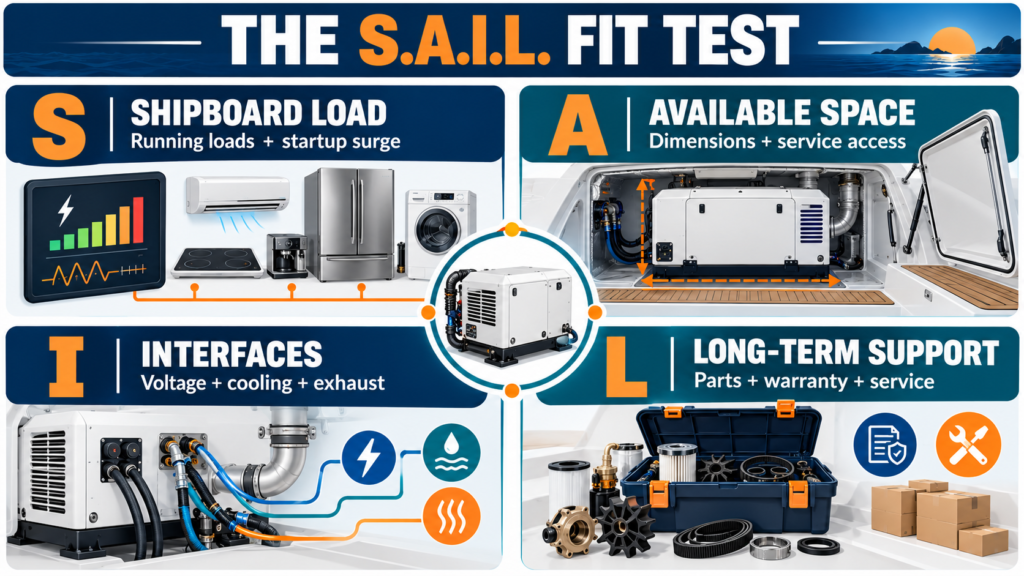
Use this four-part framework to compare a sailboat generator against the boat’s actual needs. It’s an editorial decision aid for organizing your research, not a manufacturer rating or industry standard.
List the equipment the generator must support, including what may run at the same time. Record running requirements and starting surges, especially for compressors and motors. Decide which loads are essential and which can be staggered.
Measure the generator compartment, installation route, and clearance around the unit. Include the sound enclosure in your measurements. Check whether filters, belts, connections, and other service points will still be reachable once the generator is installed.
Confirm AC or DC output, voltage, frequency, phase, fuel requirements, cooling arrangement, exhaust connections, mounting, and controls. A generator that matches the old unit’s kW rating may still require substantial changes if these interfaces differ.
Compare the cost of the complete project, expected maintenance, warranty terms, and availability of parts and service where the boat will cruise. A low equipment price may not be the lowest-cost option once freight, installation changes, and support are considered.
First, eliminate candidates that fail a hard gate: wrong electrical configuration, inadequate output, unsafe installation, or physical dimensions that cannot be accommodated. Then compare the remaining candidates on practical trade-offs such as noise, weight, service access, and total project cost.
A marine diesel generator is part of the vessel’s fuel, electrical, cooling, ventilation, and exhaust systems. Review the installation manual for the exact model and have a qualified marine professional assess the proposed installation.
Check the dimensions and weight of the generator with its enclosure and required accessories. Measure the route into the boat, not only the space where the genset will sit. Allow for the connections and service clearance specified by the manufacturer.
Cooling and exhaust arrangements vary by model. For wet exhaust installations, follow the manufacturer’s instructions carefully: Northern Lights warns that water can siphon past the raw-water pump after shutdown unless the installation is configured correctly.
Carbon monoxide is another essential safety consideration. The U.S. Coast Guard advises boaters to maintain fresh-air circulation, know where generator exhaust outlets are, run exhaust blowers when the generator is operating, and install and maintain CO alarms.
Verify compatibility with the vessel’s electrical system, including voltage, frequency, phase, controls, and protection. ABYC lists A-27, Alternating Current (AC) Generator Sets, among its standards; an installer should consult the current standards and applicable requirements for the specific vessel and installation.
Ask the supplier for the model-specific datasheet, installation manual, wiring information, warranty terms, and a written list of included accessories. Confirm the exact model code and electrical version on the quotation.
The generator’s purchase price is only one part of the budget. The total marine generator cost can also include removal of the old unit, freight, restricted-access work, installation changes, electrical integration, and commissioning.
Ask whether the quoted price includes the sound enclosure, remote control panel, wiring harness, pumps, and other equipment required for the selected configuration. Confirm whether installation, removal, and commissioning are included or quoted separately.
Two prices are hard to compare if one includes accessories and freight while the other covers only the genset. Request an itemized quotation that states the model, output, voltage, frequency, phase, included accessories, delivery terms, warranty, and any work excluded from the price.
For more detail on equipment pricing and project costs, link to Marine Generator Depot’s separate marine generator cost guide.
Use this checklist before requesting a recommendation or quotation:
To help narrow the options, provide the vessel details, existing generator model or nameplate, appliance list, electrical configuration, compartment measurements, delivery destination, and intended purchase timing. These details help the team compare a marine generator for sailboat use against the actual installation and operating requirements.
There is no single size for every sailboat. Start with the electrical loads that need to run together, account for startup surges, and check that the generator matches the boat’s electrical configuration and installation space.
It may suit modest loads or a system focused on battery charging, but it may not support several high-demand appliances running together. Check appliance ratings and starting requirements before choosing a 3kW unit.
Possibly, depending on the air-conditioning unit’s electrical requirements, startup surge, other loads running at the same time, and the generator’s exact configuration. Confirm compatibility with the equipment manufacturer or a qualified marine technician.
Neither rating is automatically better. Compare the load plan, physical fit, electrical configuration, and support needs. Choose 8kW only if the boat’s requirements justify its capacity and installation footprint.
Some fixed marine generators use inverter technology, but suitability depends on the model and the boat’s electrical system. Don’t assume a portable generator is an appropriate substitute for an installed marine genset. The Coast Guard specifically cautions against portable generators below decks or near accommodation spaces because of carbon monoxide risk.
A DC generator may make sense when battery charging is the main goal and the boat has a compatible battery-and-inverter system. A conventional AC generator may be a better fit when the boat needs substantial direct AC power. Compare the complete system, not just the generator.
They are key selection checks. Compare the complete unit’s dimensions and weight with the boat’s available space, installation route, and service clearances. A genset that technically fits but blocks access to service points may create difficulties later.
No. Boat length is context, not a sizing method. Electrical loads, simultaneous use, startup requirements, electrical configuration, and installation constraints are more useful selection inputs.
Check the measurement distance and conditions, and whether a sound enclosure was installed during the test. Compare like with like, then consider how mounting and exhaust installation may affect noise aboard.
Don’t assume it is. Compatibility depends on the generator configuration and the electrical requirements of the equipment aboard. Verify voltage, frequency, and phase for both before ordering.
The best marine generator for sailboat use is not necessarily the smallest, largest, or most familiar brand. It’s the generator that meets the boat’s real electrical demand, matches its system, fits the available space, remains accessible for service, and has support where the boat will cruise.
Before choosing a 3kW–10kW unit, compare the complete installation and operating requirements not just the number on the nameplate.
Contact Marine Generator Depot for a model comparison or quotation. Send your vessel details, existing generator nameplate, appliance list, electrical configuration, compartment measurements, delivery destination, and purchase timeline to help identify suitable options.
